

Raising a future conservationist
The first orchid Matilda Wallace fell in love with wasn't growing in a botanic garden or out in the bush. It was growing in her Grandad's greenhouse.
Matilda was only four years old when she followed her grandad, Peter, into the backyard and stumbled across a collection of endangered orchids. She remembers stopping in her tracks, captivated by the flowers.
"They were beautiful orchids," she said.
Her grandad, who volunteered with threatened orchids through Royal Botanic Gardens Victoria's Orchid Conservation Program, could hardly have known that this small moment would spark a passion that would one day see his granddaughter growing, monitoring and planting threatened orchids in the wild.
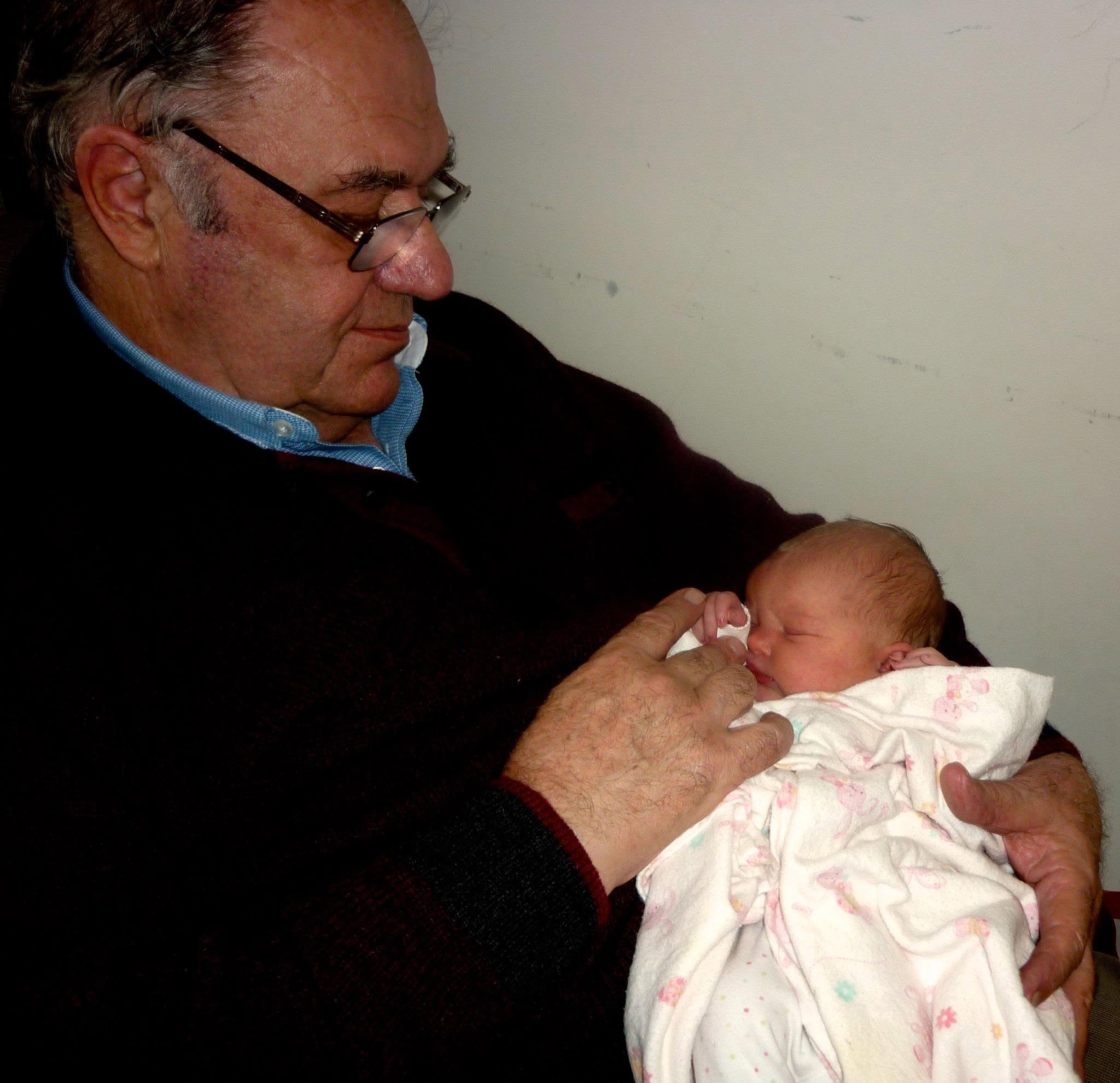
Peter holds baby Matilda
That early fascination with plants stayed with her, but it wasn't until she joined Raising Rarity at primary school that her interest in conservation truly took root.
Raising Rarity is a school outreach program that connects students with the conservation of rare and threatened Victorian plant species. Students grow threatened plants from their local area, collect growth data and harvest seed that is then stored in the Victorian Conservation Seedbank at Melbourne Gardens. Along the way, they develop practical skills in plant propagation, monitoring and conservation science while building meaningful connections with their local biodiversity.
For Matilda, the experience was transformative.
"It helped me realise this is what I want to do forever," she said. "I always knew I was going to like conservation in some sort of way ever since I was little, but it helped me realise I want to deal with plants."
She quickly discovered that conservation combined two things she loves: science and hands-on action.
"I like learning about the science behind it all," she said. "I like learning about how the plants grow and develop."
Just as rewarding was the opportunity to care for the plants herself.
Matilda WallaceI like watching them grow from the little leaf bundle that you get at the start to this very beautiful flower that seeds, and then you get to collect the seeds. It's a very fun experience.
When Matilda moved on to Maffra Secondary College, she wasn't prepared to leave Raising Rarity behind. Instead, she advocated for the program to continue at her new school, helping create a pathway for other students to experience conservation science in action.
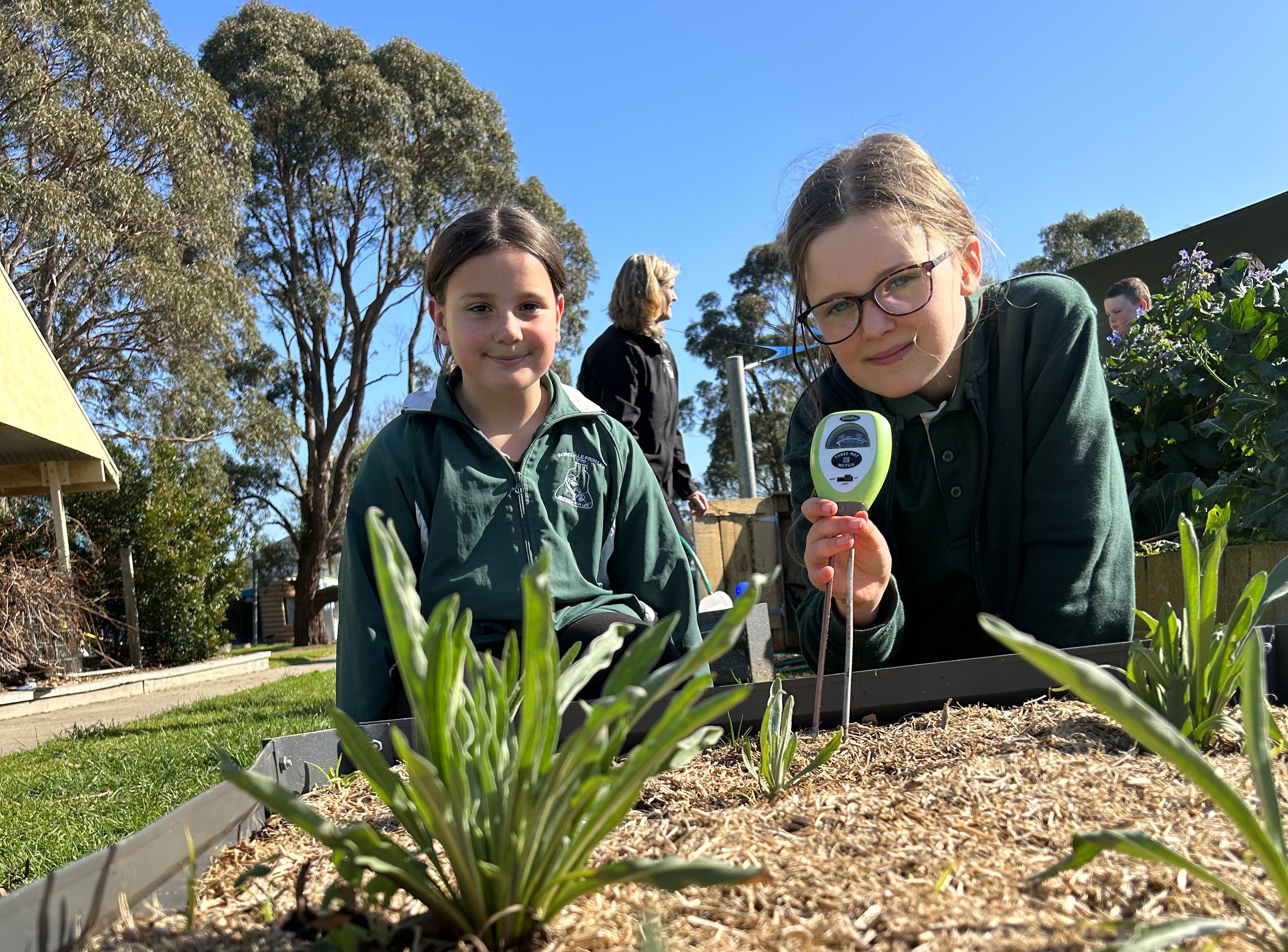
Matilda participating in Raising Rarity
Today, Matilda remains deeply involved in Raising Rarity while also taking her learning beyond the classroom and into the field.
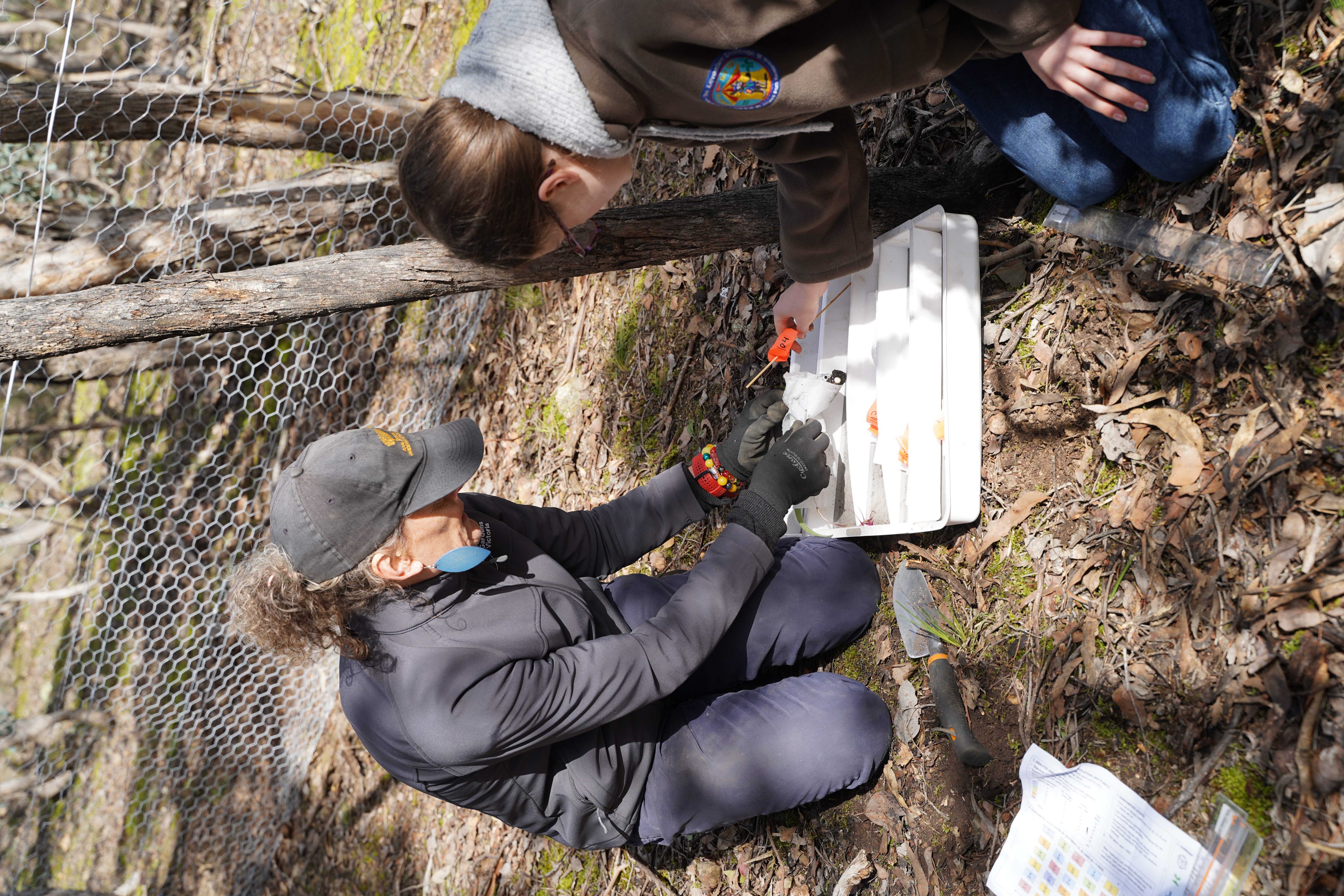
Working alongside Dr Megan Hirst, Seed Ecologist at Royal Botanic Gardens Victoria, Matilda has joined orchid translocation projects helping return rare and threatened orchid species to the wild.
At a recent field day, Matilda immersed herself in every aspect of the work, measuring orchid tubers and leaf lengths, planting orchids and helping install protective cages to safeguard plants from predators.
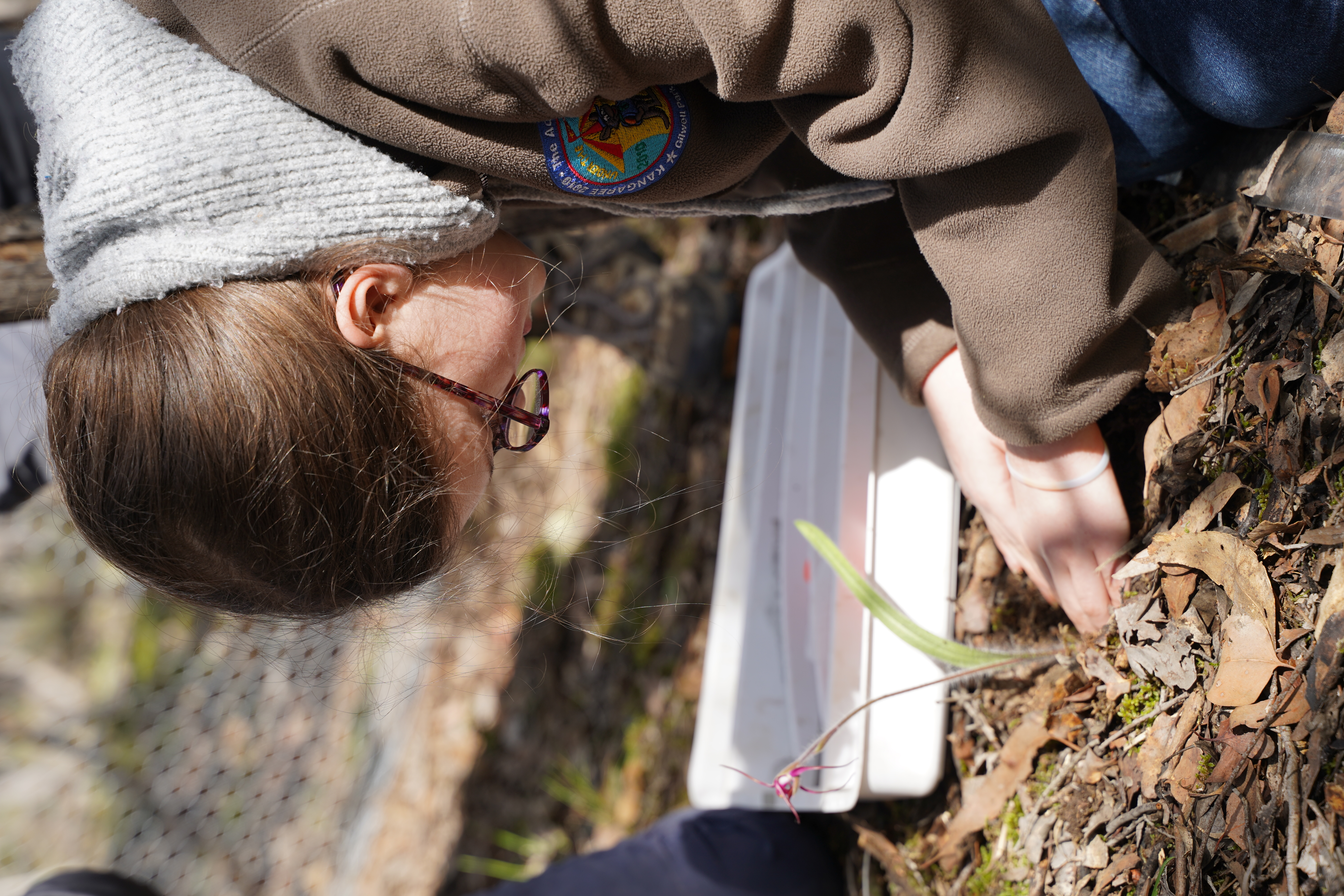
Matilda plants Caladenia rosella
"I helped measure the orchids and plant them into the ground," she said.
While Matilda enjoys learning about the science behind threatened species, she's equally enthusiastic about getting her hands dirty.
"My favourite part of the conservation days is getting in and doing the dirty work. I like seeing the plants go in the ground."
The experience has given Matilda a firsthand understanding of conservation in action and the skills needed to support it.
"I've learned a lot about the plants and how to actually translocate plants properly.
Surprisingly, before Raising Rarity, I didn't actually garden a lot. I didn't know how to plant and take care of a plant before Raising Rarity, and Meg taught me how to do this.
I am very thankful for Meg, and I will probably forever be thankful to Meg for teaching me this."
For Matilda, those lessons extend beyond technical skills. Just as important has been finding mentors who make her feel welcome and valued.
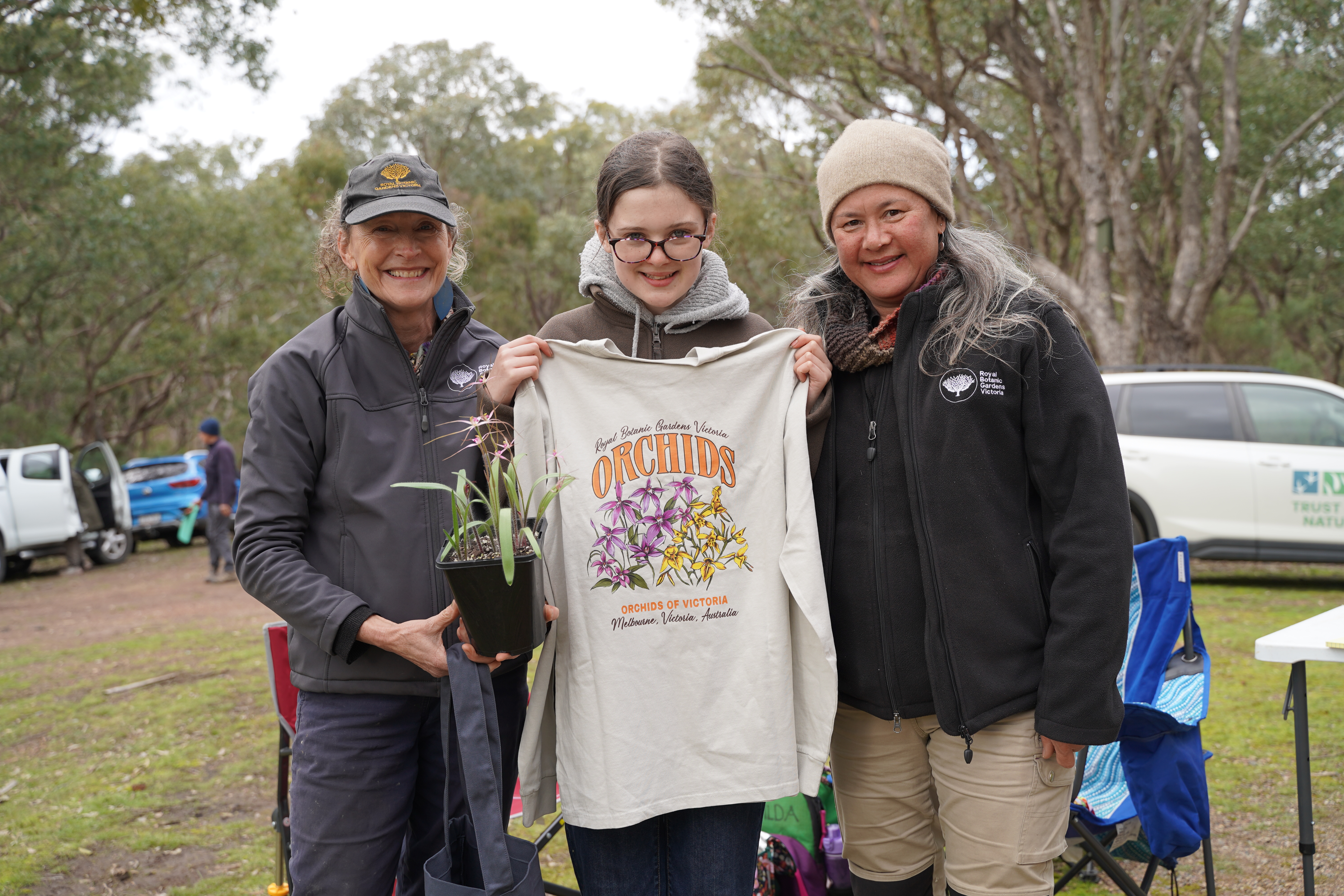
Dr Meg Hirst, Matilda Wallace and Tash Van Velzen
"Meg has a very fun job, and she's just the type of person that I love hanging out with. She makes the age gap not feel so big and makes me feel like I'm important here. I'm not just a little kid."
That sense of belonging has helped transform Matilda from a student participant into a young conservation advocate, confident enough to champion conservation opportunities at her school and contribute to projects alongside experts in the field.
When asked why conservation matters, Matilda reaches for a comparison that perfectly captures the importance of protecting biodiversity.
She describes the environment as a game of Jenga, where every block represents a species.
"If it wasn't for conservation putting those bricks back in place, the whole game is just going to collapse," she said.
It's a thoughtful perspective from someone who has already contributed meaningfully to conservation efforts and who represents exactly what Raising Rarity aims to achieve: empowering young people to see plants, value them and take action to protect them.
Matilda's passion for conservation is already shaping her future ambitions. One day, she hopes to combine her love of art and ecology as a scientific illustrator.
"When I grow up, I want to be a graphic ecologist," she said. "An ecologist is someone who helps work out ecosystems and the plants and what roles they play. A graphic ecologist helps draw the plants in a scientific manner."
She is fascinated by the role scientific illustration can play in conservation and species discovery, recalling a story where a detailed drawing helped researchers identify a feature they had previously overlooked.
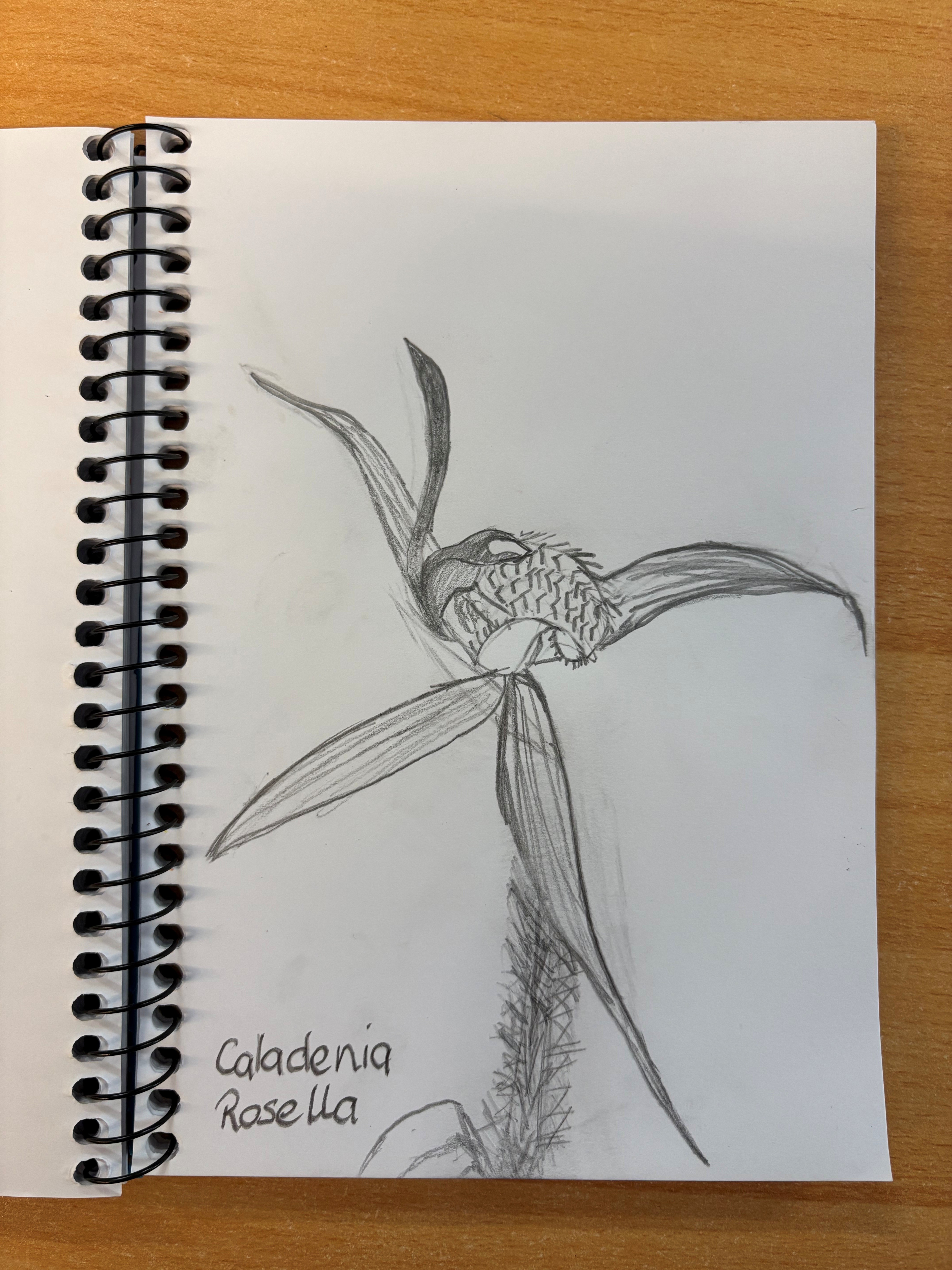
Matilda's illustration of Caladenia rosella
For Matilda, what began with a glimpse of orchids in her grandad's greenhouse has become something much bigger. Through Raising Rarity, she has found a community, developed scientific skills, contributed to the recovery of rare and threatened orchids in the wild, and discovered a passion she hopes to pursue for life.
If Matilda's enthusiasm is anything to go by, the future of plant conservation is in very capable hands.
Raising Rarity

Get your own school involved in Raising Rarity or another learning program!